
Some artworks do not ask to be liked. They provoke strong reactions, split opinions, and linger in public discussion long after they debut. When collectors spend millions on those same pieces, curiosity follows quickly. People start asking what makes them valuable, who decides their worth, and why they matter at all. These ten artworks and NFTs became flashpoints not only for what they represent, but for the prices they commanded.
The Shark in Formaldehyde That Swam Into Art History
Credit: Youtube
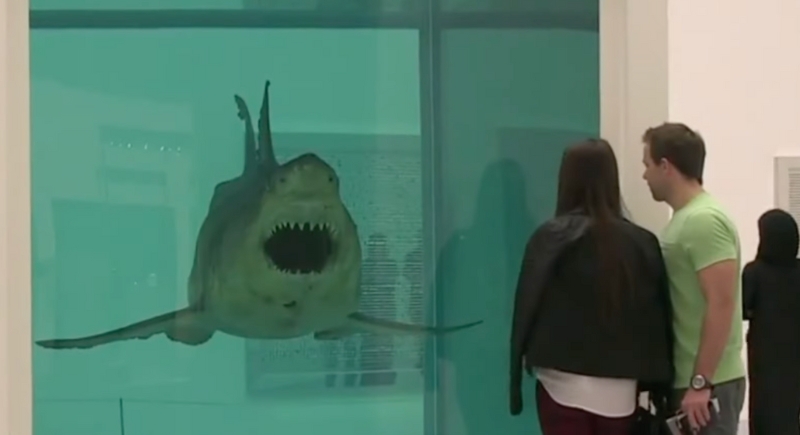
Damien Hirst’s The Physical Impossibility of Death in the Mind of Someone Living featured a preserved tiger shark suspended in formaldehyde. The work sparked outrage over its use of real animal remains. In 2006, it reportedly sold to hedge fund manager Steve Cohen for around $8 million.
Beeple’s Digital Collage That Changed the Game
Credit: Youtube
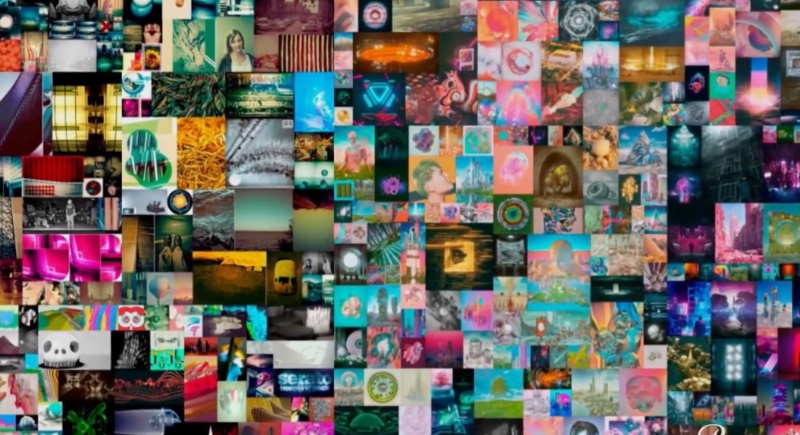
Mike Winkelmann, known as Beeple, created Everydays: The First 5000 Days, a massive digital collage stitched from 13 years of daily art posts. It made history at Christie’s in 2021 when it sold for $69.3 million. That sale helped launch NFTs into mainstream conversation and turned Beeple into a household name overnight.
A Skull Made of Diamonds and Plenty of Opinions
Credit: Wikimedia Commons
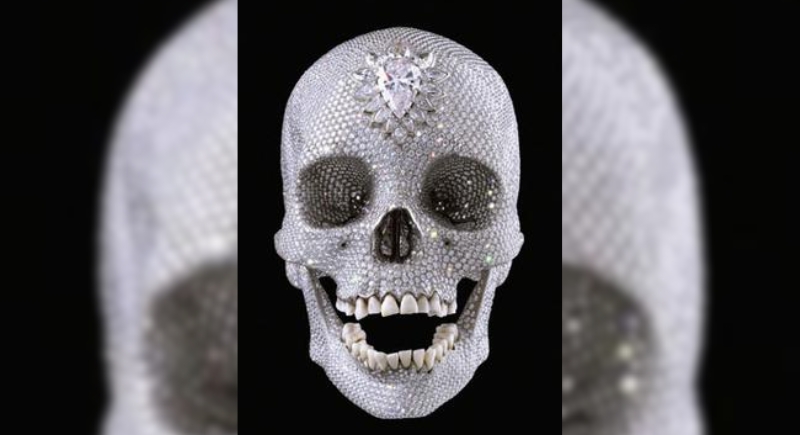
In 2007, Damien Hirst unveiled For the Love of God, a platinum cast of a human skull set with more than 8,000 diamonds. The piece reportedly sold for around $100 million to a group of investors. For some viewers, it felt like pure spectacle, built to shock and dominate headlines. Others read it as a pointed reflection on death, wealth, and the uneasy link between the two.
A Punk With a Price Tag
Credit: X
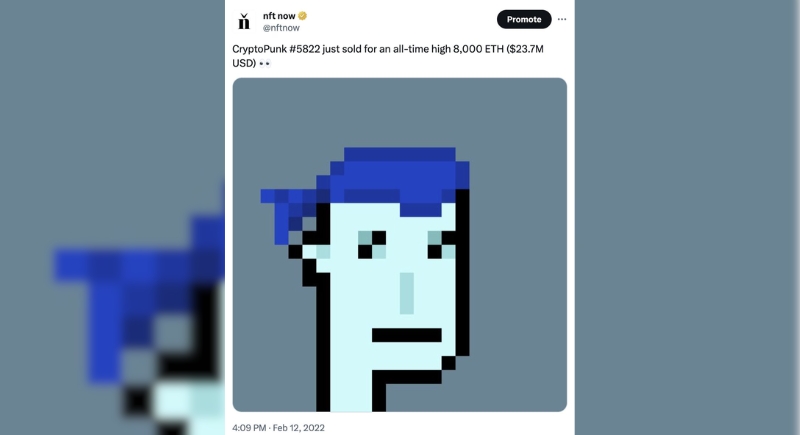
CryptoPunk #5822, a pixelated alien with a blue bandana, became the most expensive in the collection after it sold for $23.7 million in 2022. Its buyer, the CEO of Chain, used DeFi protocols to complete the purchase. The punk’s rarity—being one of only nine alien types—helped fuel its sky-high value during the NFT boom.
The Rotting Cow Head That Summed Up a Cycle

Credit: Getty Images
Damien Hirst’s A Thousand Years featured a cow’s head, a swarm of flies, and a bug zapper, each part feeding into a closed life cycle. The work relied on more than visual shock. It confronted viewers with decay as it happened. In the 1990s, collector Charles Saatchi reportedly bought it for a six-figure sum, drawn as much to its impact as to its provocation.
The NFT That Ticked for Julian Assange

Credit: Getty Images
Clock, created by digital artist Pak in collaboration with WikiLeaks founder Julian Assange, was designed as a simple countdown of Assange’s time behind bars. It sold for $52.7 million in 2022 to AssangeDAO, a collective that raised funds for his legal defense. The piece doubled as a protest and a record and captured a political moment in digital form.
A Spot Painting With 10,000 Twins
Credit: Wikimedia Commons
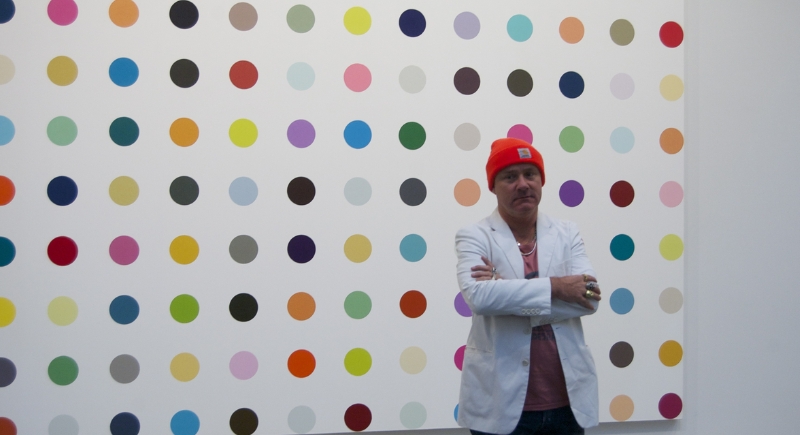
The Currency by Damien Hirst was not a single artwork but 10,000 spot paintings, each linked to an NFT. Buyers had to choose which version to keep. Those who picked digital watched the physical works destroyed. The project brought in over $89 million and reignited arguments about ownership, value, and spectacle in contemporary art.
A Cowboy Punk With Crypto Swagger

Credit: Getty Images
CryptoPunk #5577, wearing a cowboy hat and part of the Ape subgroup, fetched $7.7 million in 2022. Believed to have been purchased by Compound Finance CEO Robert Leshner, its rare features made it desirable. The cowboy hat alone appears on only 142 punks, and the punk’s sale added to the collection’s already cult-like status among crypto collectors.
The NFT That Wasn’t a Painting
Credit: Instagram
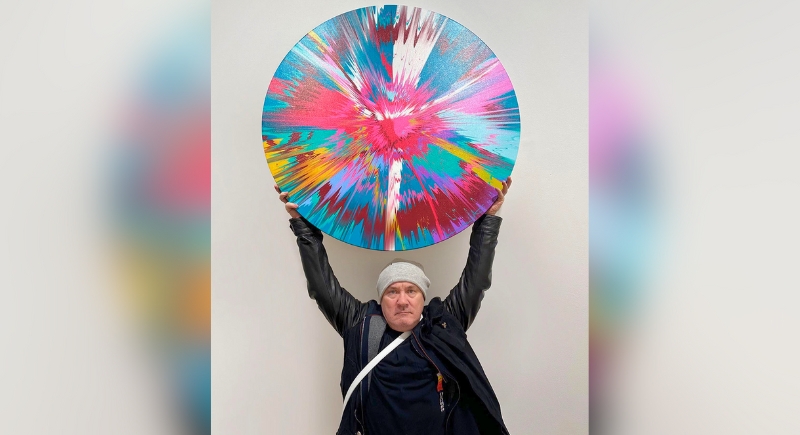
In 2023, The Beautiful Paintings by Hirst invited collectors to generate AI-powered art, which the artist then signed as physical prints. The twist? They're not traditional paintings, but Giclée prints sold through Heni for nearly $21 million total. Though he had minimal input beyond his signature, the project still drew collectors eager for a slice of Hirst's brand.
The NFT That Faked a $500M Sale
Credit: X
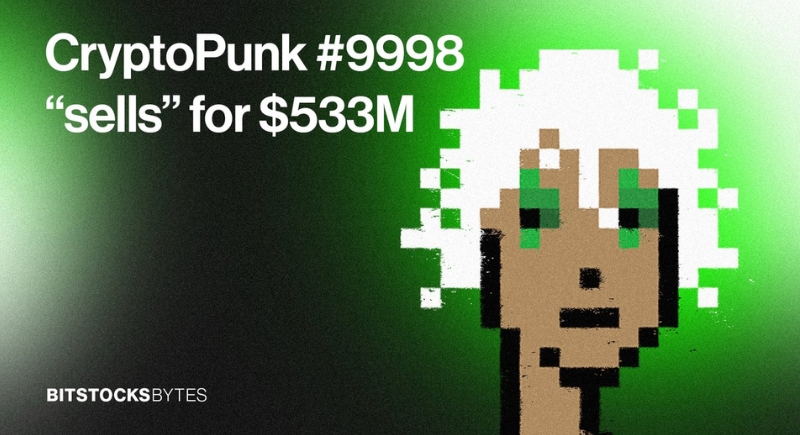
CryptoPunk #9998 appeared to sell for over $532 million in 2021, but it wasn’t real. The buyer used a flash loan to buy the punk from one wallet and send it to another, triggering headlines and confusion. It was an on-chain stunt, not a genuine exchange of funds. Still, it raised serious questions about transparency in the NFT market.